
Teaching Philosophy
Our Philosophy of Music Education
At Jacqui’s Music Studio our philosophy is woven into everything we do. We believe music education should be rigorous, joyful, creative, and deeply human. Our role as educators is not only to teach musical skills, but to nurture confident, expressive, and resilient musicians.
As a teaching community, we are committed to:
Understanding and accommodating each student’s individual learning style, strengths, and needs so they can grow as successful musicians
Remaining life-long learners who continue to refine our teaching practices and musicianship
Finding creative and engaging ways to inspire students through their study of music
Instilling confidence, joy, and self-trust in our students, with sensitivity to their unique personalities
Encouraging students to express themselves through music in ways that feel authentic to them
Recognizing music as a vital component of a child’s overall education and development
A Supportive Music Community
We aim to create a supportive, inclusive community where students feel encouraged throughout their musical journey from early childhood through adolescence. We believe students are most successful and joyful when they are supported by a network that includes their family, their teacher, and a vibrant music community.
To nurture creativity, collaboration, and confidence, we emphasize the importance of group learning alongside private study. Students at our school are offered a variety of performance and enrichment opportunities, including:
Themed studio recitals
Student ensemble performances
Small outreach performances at medical centers and community homes
Studio field trips
State competitions and festivals
Student-led assessments involving parents
Group Classes in lieu of private lessons five times a year
Participation in these opportunities is always guided by each student’s individual needs, readiness, and comfort level.
The Benefits of Studying Music
While learning music can be challenging, it offers lifelong rewards. Through music study, students develop:
Increased self-esteem and confidence
A healthy outlet for emotional expression
Self-discipline and perseverance
Stronger memory, reading, and cognitive skills
Improved coordination and multitasking abilities
Creative and critical thinking skills
Our Teaching Approach
From the very first lesson, we communicate clear expectations to students and families to help them reach their goals. Our teaching is grounded in a classical approach, emphasizing strong fundamentals and technical foundations from the beginning.
We also incorporate weekly theory, ear training, and interactive games to help students become independent, well-rounded musicians. Recognizing that each student has unique musical interests, supplemental materials are thoughtfully added to their curriculum. These may include:
Popular music and contemporary styles
Reading pop symbols and lead sheets
Improvisation and composition
Beginner jazz and blues
Accompaniment skills
This flexible approach allows students to explore their musical passions while maintaining a strong technical and theoretical foundation.
Early Childhood Music Education
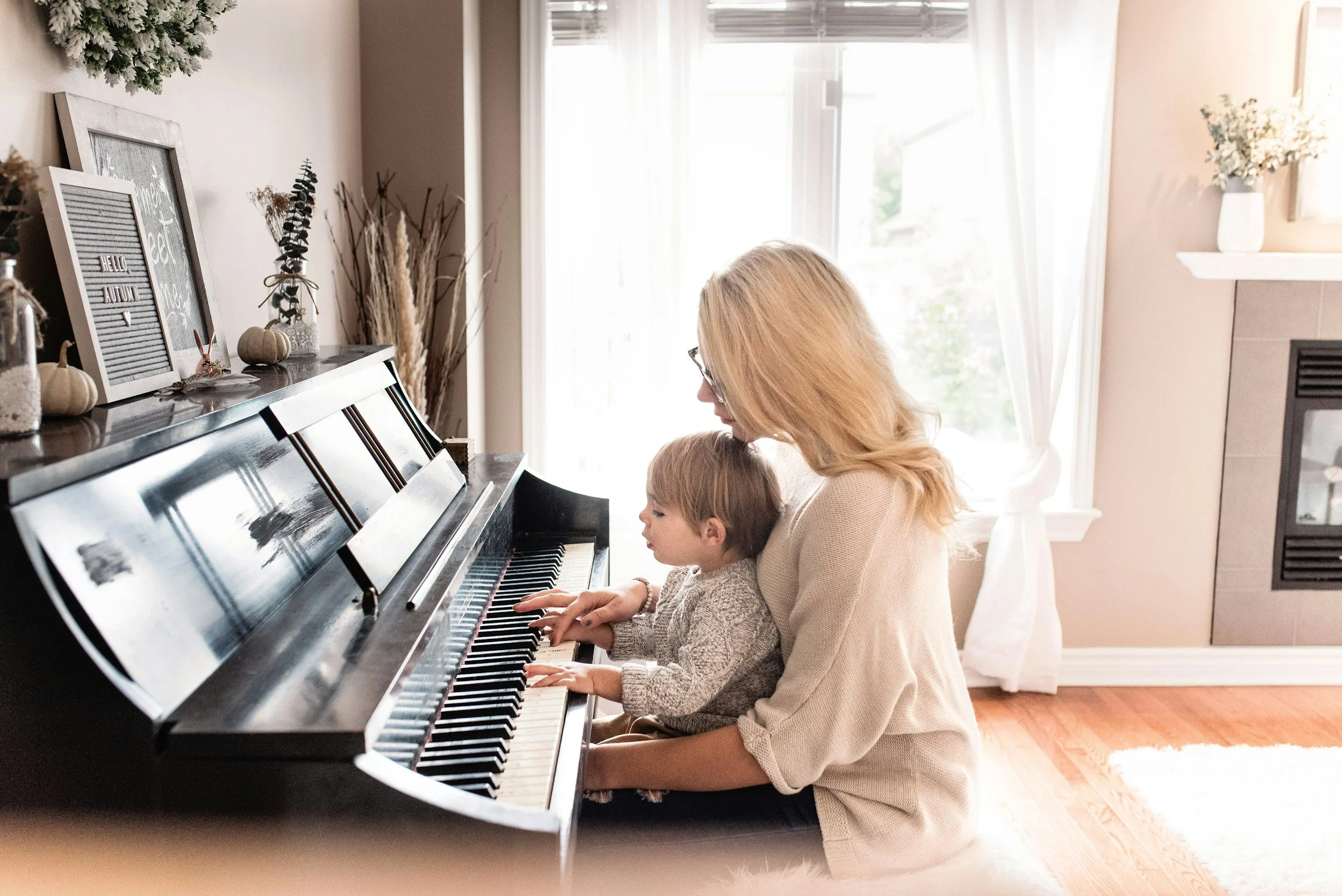
We encourage students to begin music study at an early age, typically between 3–5 years old. Positive and joyful early music experiences, centered around movement, play, and the piano help children build confidence, deepen musical understanding, and foster a lifelong love of music.
Through songs, rhymes, games, imaginative activities, instrument exploration, and age-appropriate method books, students engage with music from their very first class. Research consistently shows that learning the piano supports neural development and strengthens brain connections, making early music education an ideal foundation for young learners.
Partnership with Families
When families express interest in lessons, we share our educational philosophy and studio policies and invite them to an in-person meeting at the studio. This allows us to discuss goals, expectations, and program details together. Following this meeting, families and faculty mutually decide whether our school is the right fit for the student.
We believe this collaborative approach sets students up for success from the very beginning.
At Jacqui’s Music Studio, our philosophy is woven into everything we do. We believe music education should be rigorous, joyful, creative, and deeply human. Our role as educators is not only to teach musical skills, but to nurture confident, expressive, and resilient musicians.
As a teaching community, we are committed to:
Understanding and accommodating each student’s individual learning style, strengths, and needs so they can grow as successful musicians
Remaining life-long learners who continue to refine our teaching practices and musicianship
Finding creative and engaging ways to inspire students through their study of music
Instilling confidence, joy, and self-trust in our students, with sensitivity to their unique personalities
Encouraging students to express themselves through music in ways that feel authentic to them
Recognizing music as a vital component of a child’s overall education and development